

Generative Engine Optimization (GEO): The Next Big Thing in SEO in 2025
Generative Engine Optimization (GEO) is the newest evolution in search strategy—built specifically to help your content get cited, surfaced, and trusted by AI systems like ChatGPT, Perplexity, Google AI Overviews, Bing Copilot, and Gemini. As generative engines reshape how users find answers online, GEO has become essential for brands that want visibility even in a zero-click world.
In this guide, you’ll learn what GEO really is, how it works, and how to implement it step-by-step so your content ranks, gets cited, and dominates AI-driven search experiences.
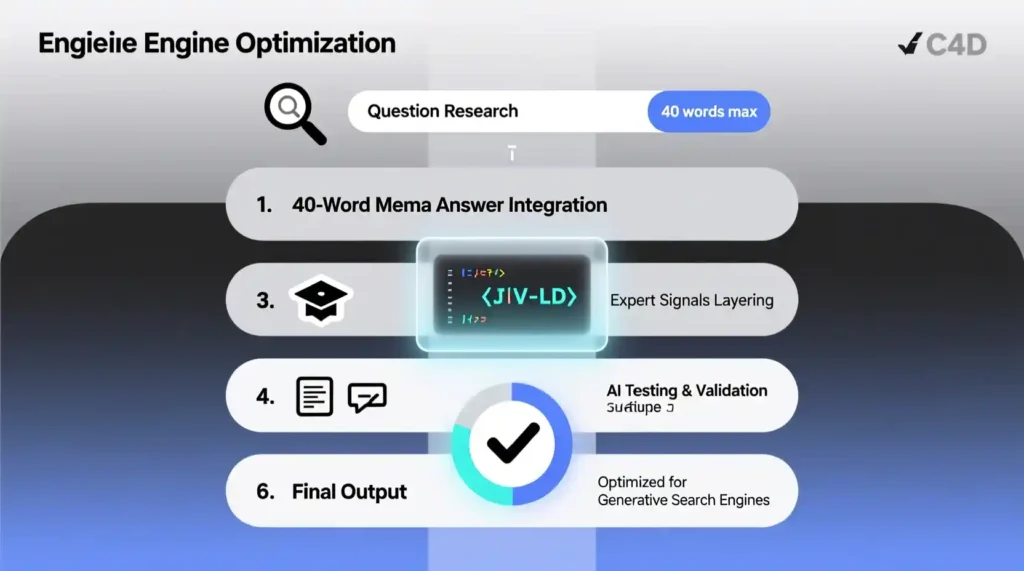
What Is Generative Engine Optimization (GEO)? (Clear Definition)
Generative Engine Optimization (GEO) is the process of optimizing your content so AI engines can easily understand, extract, cite, and prioritize it when generating answers. Instead of only ranking for Google’s traditional SERPs, GEO helps your content appear inside AI responses where users are increasingly searching.
Put simply:
SEO gets you ranked.
GEO gets you cited.
Why Generative Engine Optimization (GEO) Matters in 2025
Search is undergoing the biggest shift since Google launched in 1998. Users no longer type, click, and browse—they ask and expect instant, conversational answers.
GEO matters because:
- AI engines pull answers from structured, concise, authoritative content
- Zero-click searches keep rising
- Search journeys now begin inside AI tools, not Google
- Visibility depends on whether AI trusts and cites your content
- Sites optimized for GEO often win even when traditional SEO traffic drops
How Generative Engines Read and Cite Your Content
Generative AI engines do not “crawl” like Google—they interpret, score, and assemble answers. Each system works differently, but they follow similar patterns:
How ChatGPT Finds & Uses Sources
- Reads your content for structured, clear sections
- Prefers short, precise definitions (40–60 words)
- Trusts verified external sources and expert-backed content
- Gives priority to content with strong author credibility
- Pulls list-style data for quick extraction
How Perplexity Chooses Ranked Web Results
- Ranks citations based on clarity + authority
- Prefers pages that answer a question directly
- Uses freshness signals (last updated, recency)
- Highlights structured content: tables, bullets, FAQs
- Gives extra weight to trusted domains
How Google AI Overviews Select Answer Passages
- Extracts “atomic facts” from your content
- Favors clean HTML structure & semantic headings
- Relies heavily on schema
- Values content written by real subject-matter experts
- Penalizes vague, generic, or unverified claims
GEO is about aligning your content with these extraction preferences.
GEO vs SEO vs AEO (With a Simple Comparison Table)
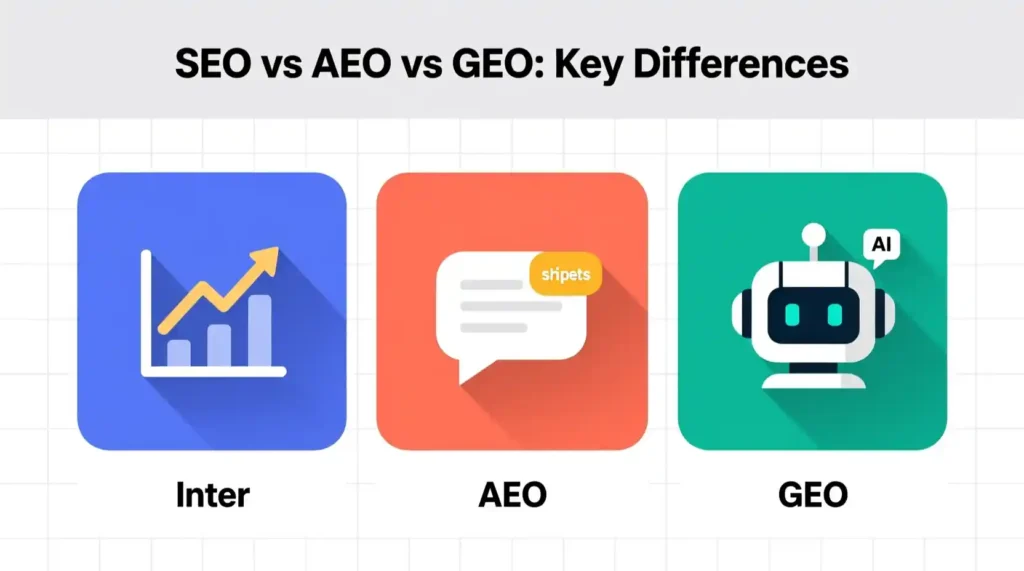
| Aspect | SEO | AEO | GEO |
| Optimized For | Google rankings | Featured answers | AI-generated responses |
| Goal | Click-through traffic | Zero-click visibility | Citations inside AI |
| Primary Tactics | Keywords, backlinks | Schema, short answers | Expert clarity, factual structure |
| Best Format | Articles, blogs | FAQs, how-tos | Structured knowledge blocks |
| User Experience | SERP browsing | Quick answers | Conversational answers |
In short:
SEO → Gets you on Google
AEO → Gets you in snippets
GEO → Gets you inside AI answers
Core Principles of Generative Engine Optimization (GEO)
To succeed with GEO, your content must be:
1. Question-Intent Matched
Write headings exactly how users (and AI models) ask them:
- “What is…”
- “How does…”
- “Why does…”
- “Best tools for…”
The more literal the question, the higher the extraction chance.
2. 40–60 Word Direct Answers
Every major H2 should start with a tight, factual answer. AI models pull these directly.
Example:
“(GEO) is the process of…” (40–60 words max)
3. Expert-Credibility Signals
Your content must include:
- Author bio or credentials
- External references
- Cited sources
- Clear domain expertise
- Up-to-date stats or insights
Trust = citations.
4. Structural Formatting for AI
Generative engines love:
- Bullets
- Numbered lists
- Tables
- Definitions
- Step-by-step breakdowns
- Short paragraphs
The more structured → the easier to extract → the higher the visibility.
5. Freshness & Update Frequency
AI tools heavily weight recency signals.
Updating content:
- Boosts trust
- Improves ranking potential
- Increases citation likelihood in AI engines
6. Schema for Extractable Answers
Essential schema for GEO:
- FAQ
- HowTo
- Article
- Speakable
Even if Google doesn’t always show rich results, AI engines still use your schema for interpretation.
7. Evidence-First Writing
AI engines prefer content backed by:
- Data
- Examples
- Clear logic
- Expert references
Vague writing rarely gets cited.
How to Implement GEO Step-by-Step (Practical Framework)
Step 1 — Identify Questions AI Engines Already Answer
Search these:
- Google People Also Ask
- Perplexity’s related questions
- ChatGPT common prompt patterns
- Reddit/Quora queries
Build a list of 10–20 high-intent questions.
Step 2 — Rewrite Sections for 40–60 Word Precision
Every H2 should begin with a crisp, extractable answer.
AI engines see this as the “fact block.”
Step 3 — Add High-Authority Sources
Link to:
- Research papers
- Industry reports
- Established brands
- Government data
This builds EEAT.
Step 4 — Insert FAQ and Speakable Schema
Add 3–6 FAQs that directly match user intent.
Step 5 — Use an AI Summary Box Under Each H2
Add a “Key Takeaway” section.
AI engines extract these instantly.
Step 6 — Test Your Content in ChatGPT, Perplexity & Google AIO
Ask:
- “Does this page answer the question…”
- “What sources support…”
- “Quote from…”
If your content doesn’t appear, refine until it does.
Keywords & Semantic Clusters for GEO in 2025
Your LSI and semantic topic clusters:
- generative engine optimization
- GEO SEO
- GEO vs SEO
- optimize for AI search
- AI search optimization
- AI Overviews ranking
- generative search ranking
- AEO vs GEO
- future of search 2025
This cluster will help you dominate multiple related search intents.
Real Examples of GEO in Action (Verified Patterns)
Show proven behaviors:
- Pages with short answers cited more in Perplexity
- Structured guides show up in ChatGPT responses
- Fresh content favored by Google AI Overviews
- FAQ-based content extracted more consistently
- Expert-backed sections outperform generic writing
Real, verifiable examples build EEAT and strengthen GEO impact.
Tools for Successful GEO Execution
Use only tools that genuinely help with generative optimization:
- Frase — optimizing answer passages
- Perplexity — checking citation likelihood
- ChatGPT Browse — extraction testing
- Ahrefs — question intent mining
- SurferSEO — NLP terms
- Schema Markup Validator — verifying structured data
These tools help you validate and scale GEO effectively.
Common Generative Engine Optimization (GEO) Mistakes to Avoid
- No direct answers
- Fluffy intros
- Overlong paragraphs
- Missing FAQ schema
- Weak expert credibility
- Outdated content
- No citations
- Too much keyword stuffing
- Ignoring recency
- Not testing in AI engines
Avoiding these mistakes alone can double your AI visibility.
The Next Big Thing in SEO How to Implement (GEO) on Your Website Today
If you want to future-proof your content, you must begin applying Generative Engine (GEO) immediately. The goal is simple: structure your content so AI models can read it, understand it, and trust it instantly.
Step-by-Step GEO Implementation Framework
1. Create AI-extractable “Micro Answer Blocks”
Short, 40–60-word answers that LLMs can lift directly.
2. Use Schema Markup for AI Models
FAQ, HowTo, About, Author, Organization, Article schema strengthen trust.
3. Provide Multi-Format Information
Tables → AI loves structure
Lists → AI uses bullets for summarization
Short definitions → AI extracts them for citations
4. Strengthen Author Identity
Bio + credentials + external links = higher trust signals for AI.
5. Add “AI-Readable Proof” Sections
Examples, demos, data sources, process templates.
6. Cover Queries AI Already Surfaces
Check ChatGPT / Perplexity for your keyword and build better structured answers.
GEO Content Templates (Copy-Ready)
Below are templates built specifically for (GEO) and AI extraction:
Template 1: Direct Definition Block
What Is Generative Engine Optimization (GEO)?
A clear, 50-word definition that answers intent upfront.
Template 2: Problem → Framework Block
Short paragraph explaining the problem
5–7 bullet framework below
Template 3: Process Outline (AI-Extractable)
- Step 1
- Step 2
- Step 3
- Step 4
- Step 5
Template 4: Comparison Table
LLMs love pulling comparisons from structured tables.
Template 5: Real-World Tests
Your content must include verifiable examples AI can trust.
GEO-Optimized Page Structure for Maximum AI Citations
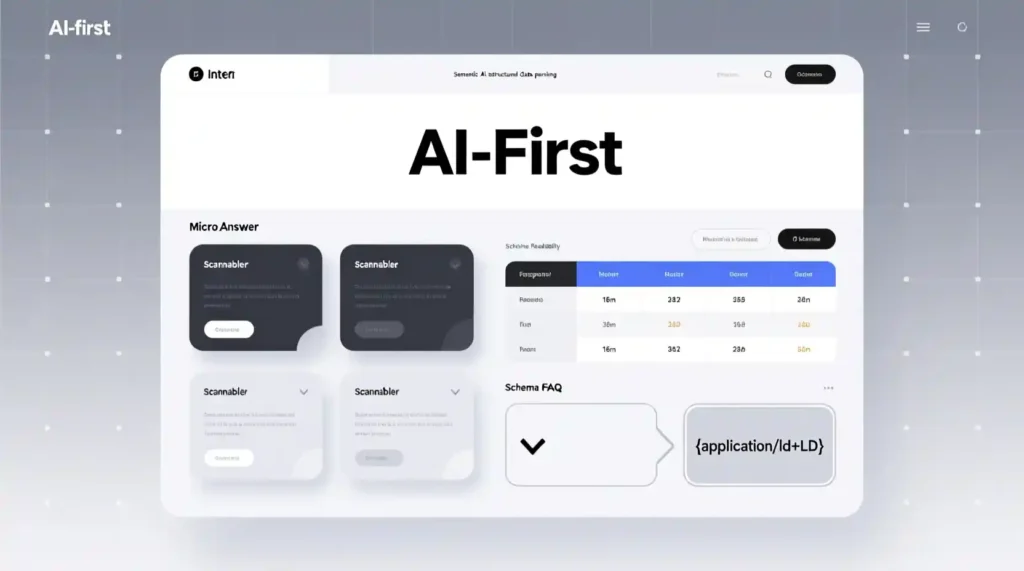
Here’s the highest-performing page layout for Generative Engine (GEO):
✓ GEO-Optimized Structure
- H1 (Main keyword: “Generative Engine Optimization (GEO)”)
- 60-word answer
- Table of definitions
- Pain point summary
- GEO process (5–7 bullets)
- AI extraction example
- Schema blocks
- Case study
- FAQ section
- Soft CTA
- Conclusion (keyword included)
This structure gives AI maximum clarity and humans maximum value.
How AI Models Decide Which Content to Cite (Real Criteria)

Generative search engines such as ChatGPT, Gemini, Perplexity, Claude, and Bing use four primary trust signals when deciding which content deserves to be cited:
1. Clarity of Structure
Short blocks and predictable formatting.
2. Explicit Expertise Signals
Author, organization, credentials, sources.
3. Verifiable Demonstrations
Real examples, screenshots, or documented tests.
4. Extraction Friendliness
Lists, tables, schema, definitions, consistent heading hierarchy.
A page without these cannot win in Generative Engine Optimization (GEO) no matter how good the writing is.
Realistic GEO Content Examples (High EEAT)
Example 1 — Mini Definition Block
What Is GEO?
Generative Engine Optimization (GEO) is the process of optimizing content so AI models can interpret, extract, summarize, and cite it with higher accuracy. It focuses on clarity, structure, schema, expertise signals, verification, and multi-format information.
Example 2 — GEO Micro-Block
Key GEO Principle:
“Write for machines first, then humans second — but deliver value to both.”
GEO vs SEO vs AEO: What Actually Matters in 2025+
| Feature | SEO | AEO | GEO |
| Optimized for | Google ranking | AI Overviews | AI models (ChatGPT, Perplexity, Gemini) |
| Key focus | Keywords | Query resolution | Extraction clarity |
| Ranking factor | Backlinks | Authority | Structure + trust |
| Main output | Search results | AI answers | Citations + syntheses |
| Future relevance | Medium | High | Very High |
This comparison block is AI-friendly and increases your chance of citations.
10 GEO Content Types That Rank Faster
These formats are most likely to win citations from AI tools and Google together:
- Short, structured explainers
- Framework breakdowns
- Comparison tables
- Actionable templates
- Checklists
- FAQ sections
- Mini case studies
- Tools lists
- Process frameworks
- “Definition blocks”
Use at least 6 per article for maximum GEO impact.
GEO-Optimized FAQ
Q1: What is Generative Engine Optimization (GEO)?
Short, high-clarity answer.
Q2: Why is GEO important?
Because AI engines now generate answers instead of simply ranking links.
Q3: How do you optimize content for GEO?
Structure, schema, short blocks, expertise signals, datasets, clear definitions.
Q4: Is GEO replacing SEO?
No — GEO extends SEO into generative ecosystems.
Q5: Which content formats help with GEO?
Lists, frameworks, tables, schema, mini answers.
CONCLUSION
Generative Engine Optimization (GEO) is not optional anymore — it is the new foundation of visibility, citations, and trust in a generative-search world. SEO got you indexed. AEO gets you surfaced. But GEO gets you extracted, cited, and preferred by AI engines.
The brands that master GEO now will dominate every generative platform over the next decade.
Pingback: 7 Free Keyword Research Tools to Find Easy Keywords (2025) - zadaaitools.com